
It’s 7:55 AM on a Tuesday. Sarah, a recent college graduate, doesn’t have to rush through breakfast, scramble for her keys, or face an hour of bumper-to-bumper traffic. Instead, she sips her coffee, walks ten feet to her dedicated home office corner, and powers up her laptop. By 8:00 AM, she’s logged into Slack, ready for the morning stand-up with her team. Sarah is a Junior Data Analyst, and she landed this role with almost no professional experience. This lifestyle isn’t a fantasy; it’s the reality for thousands who have successfully secured legitimate remote entry level jobs.
The traditional notion that you must “pay your dues” in a physical office cubicle is dead. Hiring managers across the United States have realized that talent doesn’t require a specific GPS coordinate. If you are actively looking to apply for work right now, you are in the strongest position in history to dictate how and where you work. But the competition is fierce. Thousands of applicants are clicking “Easy Apply” on generic boards. To actually land one of these coveted remote entry level jobs, you need a distinct strategy, an insider’s understanding of what recruiters actually want, and the right tools to make your application undeniable.
As someone who has spent years directing HR departments, I’m going to be completely honest with you: most entry-level resumes I see for remote roles are terrible. They focus on what the applicant wants, not what they can do. They are generic, uninspired, and immediately filtered out by automated systems. If you want to stop scrolling and start working, you must treat your job search like a job itself. Let’s break down the exact playbook for identifying, applying for, and securing high-quality remote entry level jobs.
Busting the Myths: What “Entry Level” Means in 2026
Forget everything you think you know about entry-level work. In the remote landscape, “entry level” doesn’t mean low-skill, mind-numbing data entry (unless that’s specifically what you’re looking for). Companies are hiring for Junior Software Engineers, Associate Marketing Managers, Customer Success Specialists, and Financial Analysts as fully virtual roles.
The biggest mistake applicants make is assuming that a lack of professional experience means a lack of relevant skills. If you completed coursework, a bootcamp, specialized projects, or even held leadership roles in student organizations, you have transferable skills that corporate America desperately needs. The challenge isn’t acquiring the skills; it’s proving you can apply them in a virtual, self-managed environment.
Recruiters for remote entry level jobs prioritize candidates who demonstrate strong communication, time management, and technical proficiency. Why? Because I can’t walk over to your desk to see if you’re stuck. You must be proactive.

Where to Actually Find Legitimate Remote Entry Level Jobs
Let’s get practical. Stop relying solely on the massive aggregators. While LinkedIn and Indeed have their place, they are flooded with both ghost listings and, unfortunately, scams targeting entry-level applicants. To find the best opportunities, you need to go where the specialized recruiters hang out.
Specialized Job Boards (The Goldmines)
Niche platforms that focus exclusively on remote work offer a much higher quality of listings. Companies posting on these sites already possess a remote-first culture, meaning they understand how to onboard and manage entry-level talent effectively.
Company Career Pages (Direct Sourcing)
Identify companies that are known for being fully distributed (like GitLab, Automattic, or Doist) or are remote-friendly. Check their career pages directly. These listings often receive fewer, higher-quality applicants than those syndicated to massive job boards.
Leveraging Your Network (The Insider Path)
This isn’t just about who you know; it’s about who knows you are looking. Update your LinkedIn headline to specifically target the roles you want, such as “Aspiring Data Analyst seeking Remote Entry Level Opportunities.” Engage with content from recruiters at companies you admire. Referrals remain the #1 way companies hire, even remotely.
The Financial Reality: Salary Expectations for Virtual Beginners
One of the major draws of remote entry level jobs is the normalization of salaries. While some companies still use geographic differential pay (paying you based on your local cost of living), many progressive organizations pay based on the value of the role itself. This means someone living in a rural area can command a salary competitive with someone in a major tech hub.
If you are a W-2 employee, do not accept the “contractor myth.” Legitimate companies hiring for permanent remote entry level jobs provide the same benefits—health insurance, 401(k), and paid time off—as their in-office counterparts. Furthermore, they should ship you a company laptop and provide a home office stipend. If a company asks you to buy your own equipment via a check they mail you, it is a scam.
2026 Entry-Level Remote Salary Expectations (U.S. National Averages)
| Role Category | Sample Titles | Expected Salary Range (Annual) | Top Transferable Skills to Showcase |
| Technology & IT | Junior Developer, IT Support Specialist, QA Analyst | $65,000 – $95,000 | Coding languages (Python, Java), Troubleshooting, SQL, API understanding |
| Customer Success | Customer Support Specialist, Associate Success Manager | $45,000 – $65,000 | Empathy, Written communication, Problem-solving, CRM familiarity (Salesforce, Zendesk) |
| Marketing & Creative | Social Media Coordinator, Marketing Associate, Junior Designer | $50,000 – $75,000 | Content creation, Analytics (Google Analytics), SEO basic knowledge, Adobe Creative Cloud |
| Admin & Operations | Administrative Assistant, Operations Coordinator, Data Entry Clerk | $40,000 – $60,000 | Calendar management, Microsoft Office/Google Workspace proficiency, Organization, Attention to detail |
| Finance & Data | Junior Accountant, Data Analyst Associate | $60,000 – $85,000 | Advanced Excel (Pivot Tables, VLOOKUP), Financial modeling basic, Tableau/PowerBI |
Crafting a Resume that Beats the Robots and Hooks the Humans
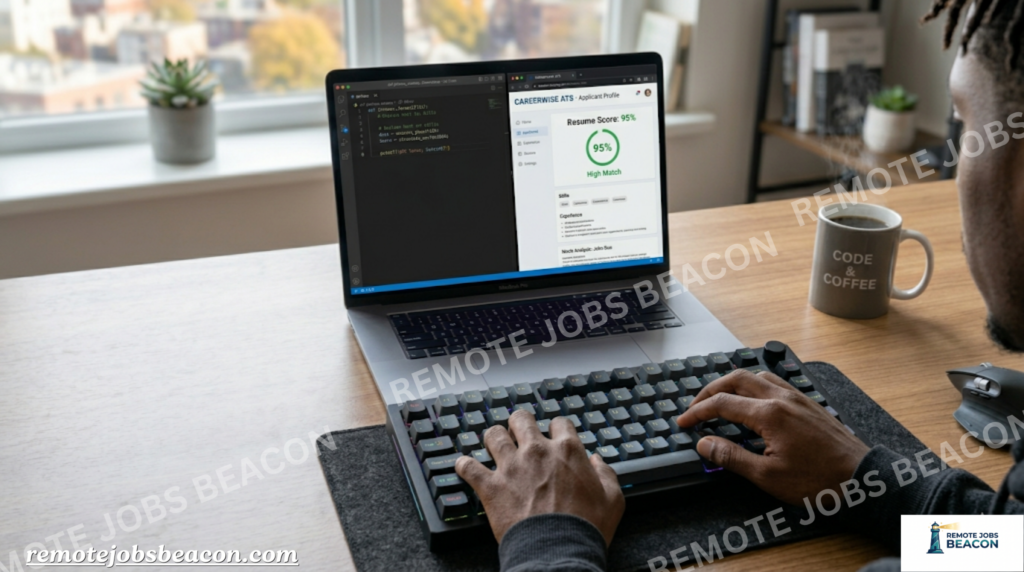
This is where the battle for remote entry level jobs is truly won or lost. As an HR director, I’m going to let you in on a massive secret: I spend about 6 seconds on an initial resume review. But before I even see it, an Applicant Tracking System (ATS) has already scored it.
The ATS is algorithms, not magic. It parses your resume for keywords that match the job description. If the job listing mentions “project management” three times and you have “organized tasks” on your resume, the ATS might give you a zero score for that keyword.
To stop getting automated rejections, you must optimize.
Ditch the “Objective” Statement
“Recent grad looking for a challenging opportunity…” I know. You applied. That’s the objective.
Replace it with a Professional Summary that is heavily customized to the job description. If you are applying for remote entry level jobs in customer success, your summary should read: “Results-oriented Customer Success Specialist proficient in Zendesk and Salesforce with a proven ability to resolve complex user issues (transferable skill from 3 years of high-volume retail leadership).”
Master the “Hook”: Quantification
Do not just list your duties. List your impact. Even if your experience is from coursework or retail, you can quantify it.
- Weak: “Managed social media accounts.”
- Strong (even for a beginner): “Managed social media for a university club, increasing Instagram engagement by 40% over 6 months by implementing a new content calendar.”
This demonstrates ownership and results, which are vital qualities for remote entry level jobs.
Strategic Hint: Leverage Our Technology
The optimization process can be tedious. If you want to ensure your document perfectly aligns with what corporate recruiters are actively seeking right now, utilize our ATS Resume Builder Tool. It analyzes your resume against any job description, identifying missing keywords and formatting issues that cause 75% of resumes to be auto-rejected. This technology isn’t optional; it’s your tactical advantage in a hyper-competitive market.
The Virtual Gauntlet: Mastering the Remote Interview
Congratulations. Your optimized resume got you through. Now you face the video interview. This is not just a conversation; it’s a direct assessment of your ability to perform in remote entry level jobs. I am judging your technical proficiency, environment management, and communication skills from the moment the call starts.
The Technical Check (The “No-Excuses” Zone)
- Internet: Hardwire if possible. Run a speed test. If your connection drops constantly during the interview, I will assume you cannot handle client video calls.
- Lighting & Audio: Do not have a bright window behind you (turning you into a silhouette). Use a professional external microphone or high-quality earbuds. If I can’t hear you clearly, I can’t evaluate you.
Nailing the Virtual Presence
Maintain “eye contact” with the camera, not the person on the screen. Dress professionally from head to toe (it changes your mindset, even if they can only see your top half). Ensure your background is neutral, professional, and free of clutter.
Preparing for Behavioral Questions
Entry-level interviews rely heavily on behavioral questions (e.g., “Tell me about a time you faced a difficult challenge…”). I am looking for evidence of self-reliance, problem-solving, and time management—vital traits for success in a virtual setting.
- HR Director Tip: Utilize the STAR Method. When answering, structure your response as: Situation (set the scene), Task (what needed to be done), Action (what you did), and Result (what happened/what you learned). This keeps your answers concise and impactful.
Setting Yourself Apart from the Pack
If you want to genuinely compete for top-tier remote entry level jobs, you must do more than the bare minimum. Show me that you can work autonomously.
Build a “Proof of Concept” Portfolio
If you want a data analyst role, don’t just say you know SQL. Clean a public dataset and build a dashboard in Tableau or PowerBI. Host it on GitHub or a personal website. When I ask, “How do you handle complex data?” you don’t just explain; you share your screen and show me. This evidence is undeniable and overrides a lack of traditional professional experience.
Upskill Targeted to Remote Work
While looking for remote entry level jobs, obtain certifications in tools commonly used in distributed teams (e.g., Google Workspace, Jira, Asana, Zendesk). This proves you can self-teach, a non-negotiable requirement for onboarding effectively as a virtual junior employee.
Strategy Hook: Streamline Your Hunt
Stop wasting dozens of hours manually scrolling through mixed listings on massive sites. You are actively looking to find and apply today. To instantly connect with verified employers that have been thoroughly vetted for strong remote-first cultures and specifically hire beginners, use our Job Matchmaker Tool. It customizes search results based only on your unique skills and desired role category, bypassing the noise and taking you straight to valid remote entry level jobs.
FAQs: Expert Advice on Virtual Beginners
Can I realistically get hired without any formal experience?Yes. But you must have verifiable skills. This is vital evidence. If you can build a coding project, write compelling copy, or analyze a complex dataset (even as a personal or academic project), you have marketable skills. Your job is to prove those skills in your portfolio and resume, not to wait for a company to provide them for you.
Do companies ship equipment for remote entry level jobs?Yes. Legitimate corporate employers in the United States ship you a secure, managed laptop (usually a MacBook or high-end Dell) pre-loaded with the necessary software and virtual private networks (VPNs). If a “company” asks you to buy your own equipment from a specific vendor with a check they mail to you, it is an established scam.
Are these roles all customer service and call centers?No. While the customer success sector is a massive employer of entry-level virtual talent (especially in tech), thousands of remote entry level jobs exist in software engineering, marketing, HR, finance, and operations.
How do I onboard if I’ve never done the job before? Progressive companies offering valid remote entry level jobs have structured digital onboarding programs. This includes virtual documentation, dedicated mentors, and asynchronous training modules. I expect you to have a foundational skill set; I do not expect you to know how to navigate our specific corporate workflows on day one.
Is the pay lower because it’s an entry-level remote job?No. Many forward-thinking companies are moving toward a standard national salary rather than localization. This means an operations coordinator in Iowa could make the same entry-level salary ($55k) as one in Boston, providing a significantly higher quality of life.
The opportunity to launch your career from a home office is not a temporary trend; it is the fundamental restructuring of the professional world. The demand for remote entry level jobs exists. The technology to connect you with employers exists. The only missing piece is your distinct strategy. If you stop mass-applying and start strategically optimizing, landing one of these coveted positions is not just a distant possibility—it’s an inevitability. Build your portfolio, master the virtual interview, and get to work building the career you want, starting today.
