
Stepping away from the grueling physical demands of floor nursing no longer means giving up your hard-earned credentials. Across the United States, the healthcare industry is experiencing a profound transition toward distributed care networks. If you are a Licensed Practical Nurse seeking remote lpn jobs, you are positioned to enter an incredibly stable, highly compensated, and fast-growing sector of modern medicine. Major insurance corporations, digital health platforms, and managed care networks are actively scouring the market for practical nurses who can manage complex clinical data, coordinate care, and evaluate medical necessity straight from a home office.
However, trading your scrubs for a virtual workspace requires a deliberate strategy. Because working from home offers unmatched personal flexibility and eliminates exhausting 12-hour shifts, competition for every open position is fierce. To successfully stand out, pass automated applicant tracking systems, and secure your placement, you need an exact plan of execution. This chronological, highly actionable blueprint walks you through the exact operational phases required to transition from direct bedside care into premier remote lpn jobs.
Phase 1: Target High-Paying Industries Hiring for Remote LPN Jobs

Not all work-from-home positions are structured identically. Before updating your credentials, you must understand where the most stable, well-paying remote lpn jobs reside. The non-bedside corporate landscape generally separates virtual nursing into four core professional specializations, each carrying its own structural workflow and performance expectations.
To focus your search on legitimate, corporate entities offering remote lpn jobs, prioritize these high-demand industries that actively list clinical vacancies:
- Managed Care and Health Insurance Providers: Industry giants such as UnitedHealth Group, Humana, Centene, and Elevance Health are the largest employers of virtual practical nurses. They recruit heavily for remote lpn jobs focused on reviewing clinical documentation and managing prior authorizations.
- Remote Patient Monitoring (RPM) Companies: Technology-driven medical corporations hire practical nurses to monitor real-time health metrics—like blood pressure or blood glucose levels—for patients living with chronic diseases, escalating anomalies directly to primary providers.
- Third-Party Administrators (TPAs) and Outsource Firms: Organizations like Conifer Health Solutions or R1 RCM manage the back-end medical necessity reviews for hundreds of hospital systems nationwide, creating a massive ongoing demand for virtual chart auditors.
- Workers’ Compensation and Case Management Agencies: Corporate risk management firms hire practical nurses to track employee injury claims, coordinate specialty referrals, and ensure care plans align precisely with regulatory guidelines.
Phase 2: Analyze Compensation Metrics for Remote LPN Jobs
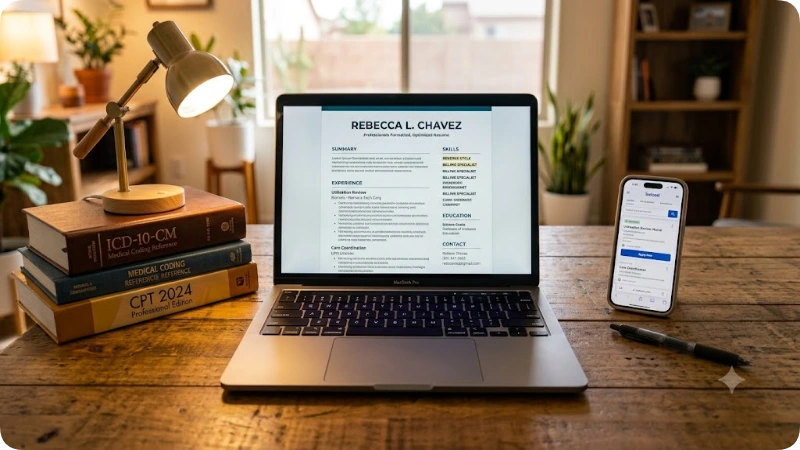
You do not have to accept an inferior wage to secure geographical freedom. In fact, many major corporations provide competitive salary baselines for virtual employees because distributed workforces minimize expensive physical real estate, utility overhead, and regional facility costs. When tracking down competitive remote lpn jobs, understanding your baseline market worth is half the battle.
Your actual earning potential across remote lpn jobs is influenced by your physical geographic location, your accumulated years of specialized clinical experience, and your underlying licensure status (specifically whether you hold a multi-state compact license). The detailed breakdown below outlines current average compensation targets across the primary remote nursing specializations for modern remote lpn jobs.
Salary and Specialization Comparison
| Nursing Specialization | Typical Remote Job Titles | National Annual Salary Range | Essential Experience Threshold |
| Utilization Review | Prior Authorization Specialist, Clinical Reviewer | $58,000 – $74,000 | 2+ Years Acute Care or Rehab |
| Care Management | LPN Case Manager, Care Coordinator | $62,000 – $78,000 | 1–3 Years Home Health or Outpatient |
| Digital Health | Telephonic Triage Nurse, Intake Coordinator | $52,000 – $68,000 | 2+ Years Emergency or Urgent Care |
| Chronic Care Support | Remote Patient Monitoring Tech, Care Navigator | $54,000 – $70,000 | 1+ Years Internal Medicine or Geriatrics |
| Insurance Underwriting | Life Insurance Health Interviewer, Medical Abstractor | $48,000 – $65,000 | General Clinical Documentation Fluency |
Phase 3: Optimize Your Nursing Resume for Remote LPN Jobs
The most common point of failure for practical nurses trying to land remote lpn jobs occurs during the initial screening phase. Medium and large healthcare enterprises utilize automated Applicant Tracking Systems (ATS) to scan incoming documents, filtering out up to 75% of submissions before an HR manager ever lays eyes on them. If your resume reads like a traditional bedside job description full of phrases like “provided hands-on patient comfort,” the algorithm will likely score it as irrelevant to modern remote lpn jobs.
To secure interviews for premier remote lpn jobs, your resume must translate your hands-on clinical skills into corporate, administrative, and metrics-driven language. You need to focus heavily on compliance, documentation precision, and digital systems mastery.
Using our advanced ATS Resume Builder Tool allows you to instantly compare your resume against real, active corporate healthcare listings to uncover missing keyword gaps. The table below illustrates how to rewrite generic, hands-on clinical descriptions into high-scoring, corporate phrases optimized for remote lpn jobs.
Bedside Translation Blueprint
| Traditional Bedside Resume Phrases (Weak) | Corporate, ATS-Compliant Resume Phrases (Optimized) |
| Objective: Caring LPN with years of hospital experience looking to transition to a work-from-home job where I can help patients over the phone. | Professional Summary: Licensed Practical Nurse with 5+ years of clinical experience specializing in electronic health record (EHR) documentation, medical necessity reviews, and telephonic care coordination. |
| Skills: Passing medications, changing wounds, taking vital signs, answering call lights, talking to doctors, charting patient data. | Core Competencies: Utilization Review, InterQual Criteria, Prior Authorization Workflows, HIPAA Compliance, Managed Care Regulations, Data Analytics. |
| Experience: Worked on a busy medical-surgical floor. Responsible for checking patient charts daily and making sure everyone got their treatments. | Experience: Audited 35+ complex patient profiles daily for regulatory compliance. Maintained a 99.2% accuracy rate in digital care plan documentation across enterprise systems for target remote lpn jobs. |
Phase 4: Build a Scam-Free Pipeline to Find Remote LPN Jobs
The general internet is flooded with deceptive work-from-home advertisements promising unrealistic pay for vague clerical work. To protect your personal security and focus your energy on authentic remote lpn jobs, you must build an organized search pipeline using highly verified corporate and medical avenues.
Instead of typing broad phrases into basic search bars, configure your profile to look across precise industry spaces to isolate high-quality remote lpn jobs:
- Configure Niche Remote Medical Alerts: Do not search for general terms. Instead, create specific alerts on specialized job boards using targeted strings like “remote LPN utilization reviewer,” “virtual care manager,” or “telephonic triage practical nurse” to source valid remote lpn jobs.
- Audit Corporate Career Portals directly: Make a dedicated list of the top ten insurance and managed care organizations in the United States. Check their corporate career sites twice a week, as large healthcare networks frequently post and close specialized remote lpn jobs within 48 hours due to high application volumes.
- Deploy Automated Matchmaking Software: To bypass manual sorting entirely, use our proprietary Job Matchmaker Tool to automatically map your specific state licensures, clinical background, and specialty certifications directly to active, thoroughly verified corporate openings.
Phase 5: Establish a Secure Workspace for Remote LPN Jobs
Before a corporate healthcare employer issues you an official offer letter for any remote lpn jobs, their compliance or IT division will require you to verify that your home working environment meets strict federal security standards. Because you will be interacting with Protected Health Information (PHI) while working remote lpn jobs, a basic laptop on a kitchen table will not suffice.
To guarantee you pass your corporate technology check for top-tier remote lpn jobs, ensure your workspace meets these structural criteria:
- Dedicated, Private Office Space: Your workspace must reside within a distinct room featuring a secure door that can be locked. Family members, roommates, or visitors cannot have visual access to your active monitors while you are managing sensitive patient medical records for remote lpn jobs.
- Sufficient High-Speed Internet Access: Virtual care platforms require steady bandwidth. You should have a minimum download speed of 50 Mbps and an upload speed of 10 Mbps. Many premier healthcare organizations mandate a direct, hardwired Ethernet connection to your router, strictly prohibiting the use of wireless Wi-Fi for security purposes during remote lpn jobs.
- Ergonomic Workspace Layout: Expect to spend up to eight hours a day sitting in front of multi-monitor arrays. Invest in a high-quality ergonomic office chair, an adjustable desk space, and appropriate task lighting to protect your long-term physical health and sustain your daily processing volumes.
Phase 6: Master the Corporate Interview for Remote LPN Jobs
The final step in your blueprint to secure remote lpn jobs is mastering the virtual interview process. When a corporate clinical director interviews you via a platform like Zoom or Microsoft Teams for available remote lpn jobs, they are evaluating your medical competency alongside your ability to operate autonomously without an on-site manager tracking your movements.
Prepare your presentation strategy using these professional guidelines tailored for remote lpn jobs:
- Utilize the STAR Method Explicitly: When asked behavioral questions during your search for remote lpn jobs, structure your answers around Situation, Task, Action, and Result. For example, discuss a time you noticed an incomplete authorization form, the systematic steps you took to correct the clinical data, and how that action prevented an insurance denial.
- Highlight Your Tech Fluency: Emphasize your deep comfort level with various electronic medical records systems (such as Epic, Cerner, or Meditech) and digital communication tools (such as Microsoft Teams or Slack). Prove that you can troubleshoot minor software issues independently while maintaining peak performance in remote lpn jobs.
- Demonstrate Exceptional Communication Skills: In a virtual corporate environment, clear writing and verbal articulation prevent critical clinical errors. Throughout your interview for remote lpn jobs, speak concisely, listen actively, and explicitly highlight your past experience collaborating with interdisciplinary teams across distributed networks.
Frequently Asked Questions
Can an LPN work as a remote triage nurse or provide complex phone advice?
No. While practical nurses are highly valuable assets in digital care environments, scope of practice regulations in almost every state mandate that complex telephonic triage—which requires independent diagnostic evaluation and nursing assessments—must be conducted by a Registered Nurse (RN). Practical nurses working in these settings focus heavily on structured clinical intake, medical history collection, pre-established care coordination pathways, and post-discharge follow-ups rather than independent diagnostic triage in remote lpn jobs.
Do I need to provide my own computer and specialized medical software?
No. The vast majority of established insurance firms, managed care groups, and large healthcare enterprises will provide all necessary hardware to their virtual staff. Upon hiring for remote lpn jobs, they will ship a pre-configured corporate laptop, dual monitors, an external webcam, a professional headset, and a secure hardware VPN router directly to your residence, ensuring your connection complies with federal privacy mandates.
Are there part-time or flexible PRN remote lpn jobs available?
Yes. While full-time positions dominate the corporate health landscape, numerous managed care organizations, medical call centers, and insurance providers offer part-time or per diem shifts for remote lpn jobs, particularly during high-volume periods like the annual autumn insurance open enrollment season or peak winter respiratory illness surges.
Will working a remote position negatively impact my clinical nursing skills?
No. While your hands-on bedside skills—such as wound care or IV insertion—will naturally become less practiced over time, you will simultaneously build highly advanced corporate proficiencies that are in massive demand. Through dedicated remote lpn jobs, you will gain extensive expertise in healthcare compliance frameworks, utilization criteria, revenue cycle management, and population health logistics, opening up a diverse collection of long-term administrative career paths.
Succeeding in this professional pivot requires a complete shift in how you package, present, and apply your medical knowledge. By aligning your background with the right corporate specializations, configuring your professional materials to glide through algorithmic scoring models, and demonstrating absolute technical autonomy during your interviews, you can easily secure a competitive advantage in the employment market. The nationwide demand for virtual practical nursing experts is growing rapidly for professionals who know how to market their clinical value to corporate networks. Take complete command of your career direction today, deploy the tools at your disposal, and begin applying for verified remote lpn jobs with absolute professional confidence.
