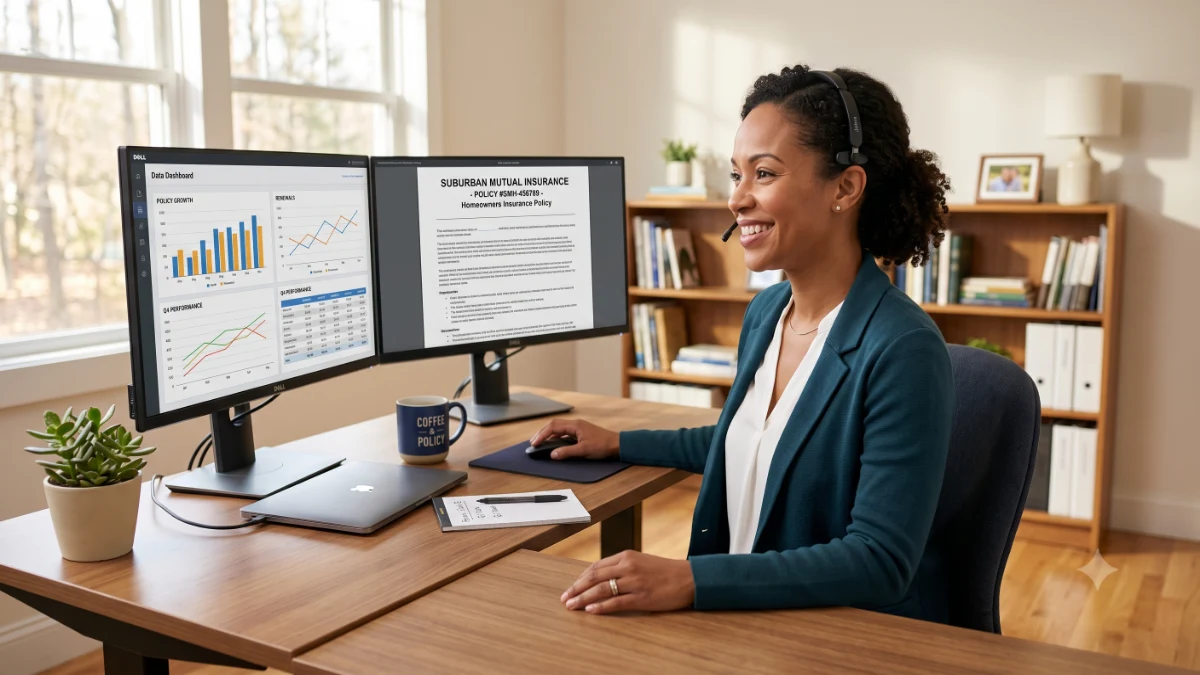
The traditional 9-to-5 office grind is fading fast, and the insurance industry is leading the charge toward total workplace flexibility. If you are actively searching for remote insurance jobs, you are looking at the right time. Companies are shedding expensive real estate down the drain and hiring top-tier talent right from their living rooms.
Whether you want to adjust complex commercial claims, underwrite risk for tech startups, or support policyholders through tough times, the digital migration of the insurance sector has opened up thousands of high-paying opportunities. You just need to know how to grab them.
Landing these coveted spots takes more than clicking “Apply” on random job boards. Competition is fierce. To stand out, you need a precise strategy. This tactical blueprint will guide you through the exact steps required to transition your career, optimize your profile, and land a premium virtual role in the modern insurance market.
Step 1: Target the Most Profitable Sectors and Roles
Not all remote insurance jobs offer the same earning potential or work-life balance. The industry spans multiple massive sectors, each requiring a distinct blend of analytical, technical, or interpersonal skill sets.
To maximize your job search efficiency, you must focus on the specific niches that are expanding rapidly in a work-from-home environment.
The Remote Insurance Ecosystem
The insurance world relies heavily on cloud infrastructure, data analysis, and digital communication tools. Because of this, certain specialized paths have naturally transitioned to a fully distributed model. Let us look at where the real money and stability sit.
- Underwriting: Underwriters evaluate risk to determine if an applicant qualifies for a policy and at what premium. This role is highly analytical, relying heavily on software, historical data, and corporate guidelines. It is perfectly suited for a quiet, distraction-free home office.
- Claims Adjusting & Management: While field adjusters still inspect physical property damage on-site, a massive wave of desk adjusters now manage claims entirely through digital photos, video calls, drone data, and electronic records.
- Actuarial Science: Actuaries are the mathematical backbones of any insurance firm, analyzing statistical data to forecast risk and price policies. This function requires deep focus and specialized software, making it an elite candidate for permanent remote work.
- Customer Support & Account Management: From processing policy renewals to answering coverage questions, customer-facing roles are plentiful. They offer an accessible entry point if you have solid communication skills but lack technical insurance certifications.
Compensation Realities
Before changing your resume or jumping into interviews, you need to understand what the market pays. Remote roles often cross state lines, meaning a company based in New York or Ohio might hire you while you sit in Texas.
Here is a breakdown of the current annual salary bands across major work-from-home insurance specialties in the United States.
| Job Title | Average Entry-Level Salary | Average Mid-to-Senior Salary | Primary Technical Skill Required |
| Remote Claims Adjuster | $48,000 – $56,000 | $72,000 – $95,000 | Xactimate / ClaimCenter |
| Remote Underwriter | $58,000 – $68,000 | $90,000 – $130,000 | Risk Assessment / AU Gold |
| Remote Actuary | $75,000 – $92,000 | $140,000 – $210,000+ | SAS / Python / R Programming |
| Remote Insurance Agent | $35,000 + Commission | $65,000 – $110,000+ | Salesforce / CRM Systems |
| Risk Analyst | $55,000 – $67,000 | $85,000 – $115,000 | Advanced Excel / SQL |
Step 2: Source Open Roles from Verified Virtual Employers

The biggest trap job seekers face is wasting hours on generic job aggregators filled with ghost listings, expired ads, or worse, commission-only multi-level marketing traps disguised as legitimate employment. Finding premium, W-2 remote insurance jobs requires looking in the exact places where top insurance talent acquisitions managers post.
Top-Tier Employers with Remote-First Cultures
Several massive, financially stable insurance corporations have permanently embraced distributed work models. These firms regularly hire across all fifty states and frequently provide hardware, internet stipends, and robust benefit packages.
- Progressive: Known for its massive customer care and claims infrastructure, Progressive regularly hires remote customer specialists, inbound sales reps, and claims adjusters. They offer comprehensive virtual onboarding and structured career paths.
- Anthem / Elevance Health: As a health insurance giant, this company constantly recruits remote case managers, medical coders, and claims auditors.
- Allstate: Allstate has transitioned large portions of its corporate workforce, including underwriting and corporate risk management teams, to a permanent work-from-home framework.
- Liberty Mutual: This global carrier offers extensive remote opportunities in commercial underwriting, digital claims processing, and legal counsel.
- The Hartford: Frequently ranked high for workplace culture, they hire virtual workers for workers’ compensation claims, tech support, and data analytics.
Specialized Job Boards and Sourcing Channels
Do not limit yourself to standard queries on generic employment sites. To find hidden listings, use specialized insurance job boards like GreatInsuranceJobs.com or specific remote platforms like FlexJobs and Working Nomads.
Additionally, setting up automated alerts using Boolean search strings on LinkedIn can put you ahead of the crowd. Try combining terms like ("Underwriter" OR "Adjuster") AND "Remote" AND "W-2" to filter out freelance or independent contractor noise.
Step 3: Beat the ATS and Build a High-Impact Resume
Modern insurance companies process tens of thousands of digital applications every single week. To survive the initial screening, your resume must pass through an Applicant Tracking System (ATS), which scores your document based on specific algorithmic keyword matching. If your resume lacks the exact phrases the system wants, a human eye will never see it.
To ensure your application gets approved by the algorithm, you should use our ATS Resume Builder Tool to optimize your formatting and layout before submitting anything to an online portal.
Hard Skills vs. Soft Skills Alignment
Insurance is a balance of strict compliance and customer service. Your resume must reflect both. If you are applying for an analytical role, lean heavily into metrics, systems, and accuracy rates. If you are targeting a client-facing role, highlight conflict resolution, retention rates, and fast response times.
The table below contrasts a weak, generic resume approach with a highly optimized, ATS-friendly alternative that gets interviews.
| Weak, Generic Resume Style | ATS-Optimized, High-Impact Resume Style |
| Handled claims quickly and helped customers with their problems. | Managed a high-volume pipeline of 45+ commercial property claims weekly, consistently maintaining a 94% customer satisfaction rating. |
| Responsible for looking over applications to see if they fit guidelines. | Evaluated complex risk profiles for multi-million dollar policies, leveraging computerized underwriting tools to ensure strict adherence to state compliance laws. |
| Good at using various insurance programs and typing fast. | Proficient in industry-standard software including Xactimate, Guidewire ClaimCenter, and Salesforce CRM with a 99.2% data entry accuracy rate. |
| Answered phone calls and resolved policy issues for clients. | Upsold and cross-sold ancillary policies, boosting regional office retention by 14% year-over-year. |
Quantifying Your Achievements
Notice how the optimized column uses specific numbers, percentages, and software names. The insurance industry runs on risk math and data points. If your resume does not contain hard data, it looks weak.
Instead of saying you “saved the company money,” state that you “reduced claims leakage by 4.2% through meticulous fraud detection protocols.”
Step 4: Master the Virtual Interview and Showcase Home Office Readiness
Once your optimized resume clears the automated screening, you will face a series of virtual interviews. In a distributed hiring environment, managers are not just assessing your professional knowledge; they are actively evaluating your ability to function independently without direct supervision.
Technical and Environmental Preparation
Nothing kills an interview for a work-from-home position faster than technical issues. It signals to the hiring manager that you are not prepared for the realities of off-site work.
- The Setup: Ensure your background is completely clean, neutral, and professional. Lighting should come from the front, not behind you, so your face is clearly visible.
- The Connection: Use a wired ethernet connection if possible during the interview to prevent audio lag or video drops. Test your microphone and camera at least twenty minutes before the call starts.
- The Environment: Ensure zero background noise. No barking dogs, no delivery alerts, and no family traffic. A quiet space tells the employer you can safely handle sensitive, confidential policyholder data without data privacy breaches.
Anticipating Behavioral Questions
Insurance interviews rely heavily on behavioral questions. Managers want to know how you handle stress, deadlines, and ambiguous situations. Use the STAR method (Situation, Task, Action, Result) to format your answers, and make sure your examples highlight autonomous problem-solving.
Example Question: “How do you handle an angry policyholder whose claim was recently denied?”
The Strategy: Do not just say you are patient. Explain a specific time you encountered this, how you de-escalated the caller’s anger by walking them through the policy language, and how you successfully preserved the client relationship without exposing the firm to financial liability.
Step 5: Leverage Technology to Automate Your Daily Search
The job market moves fast. A listing posted at 9:00 AM might have 200 applications by noon and close by the end of the business day. To land the best positions, you must be among the first to apply.
Manually refreshing multiple websites throughout the day is exhausting and inefficient. Instead, you should utilize our specialized Job Matchmaker Tool to automatically parse the latest corporate openings and map them straight to your specific skill set.
By setting up clean parameters, clean digital notification funnels, and tracking your submissions in a simple spreadsheet, you turn a chaotic job hunt into a systematic corporate pipeline. Consistency is the real secret here. Applying to three tailored, highly optimized roles every single morning yields far better outcomes than mass-blasting fifty generic applications late on a Sunday night.
The shift toward remote infrastructure is a massive win for specialized professionals. By aligning your skills with top-tier carriers, optimizing your materials for automated tracking systems, and projecting flawless remote readiness during interviews, you can secure a lucrative, stable career path without ever dealing with a morning commute again. Focus your efforts on these steps, keep sharpening your technical credentials, and start applying to the top remote insurance jobs available right now.
